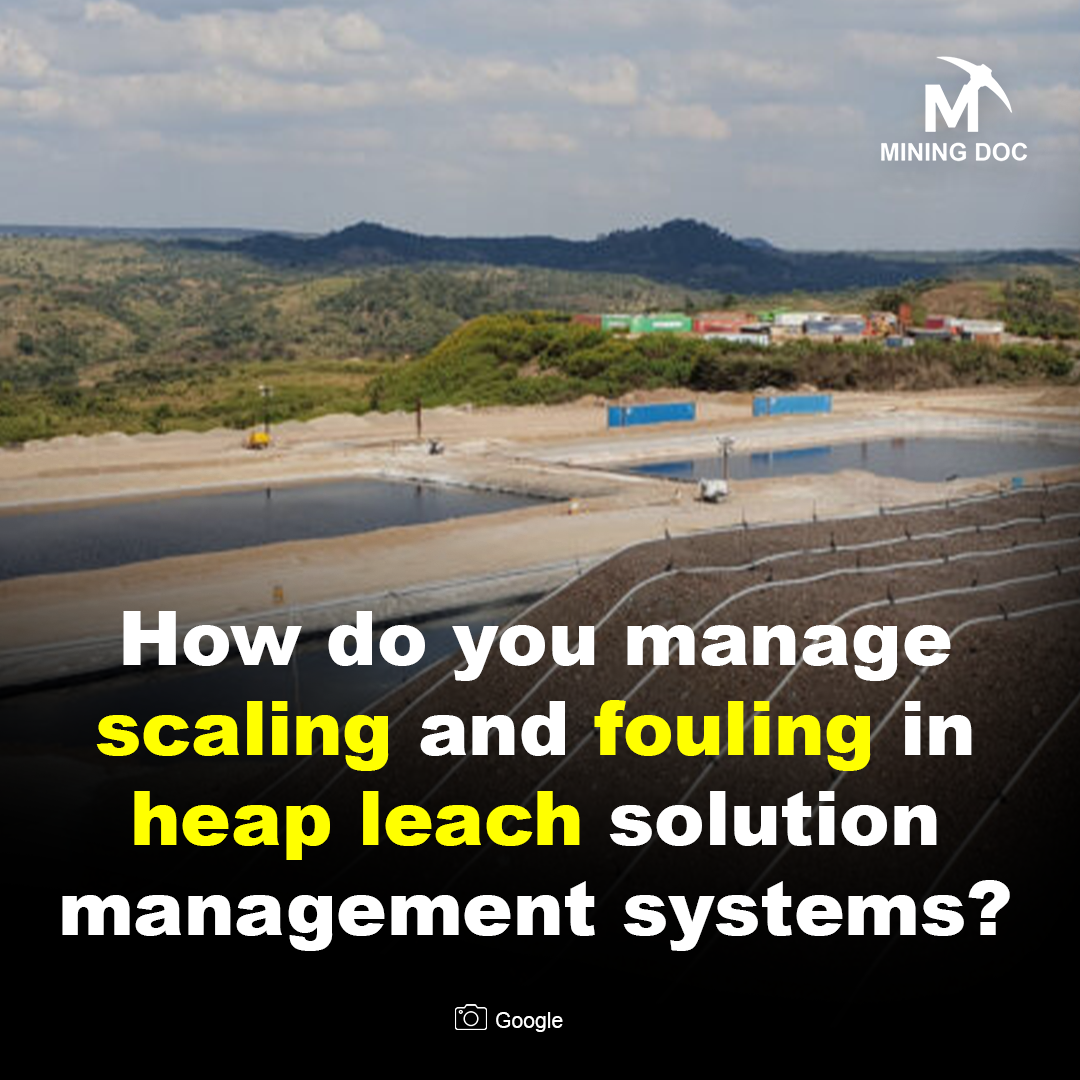
Scaling and fouling are persistent challenges in heap leach solution management, often reducing permeability, clogging irrigation systems, and lowering metal recovery. These issues typically arise from precipitation of calcium, silica, and sulfate species, alongside fines migration and biofouling. Effective management starts with understanding the interplay between solution chemistry and ore mineralogy (– Society for Mining, Metallurgy & Exploration, n.d.).
Maintaining tight control of key parameters such as pH, redox conditions, and ionic strength is essential to prevent unwanted precipitation. Many operations also apply antiscalants and dispersants to inhibit crystal growth and keep fines suspended. When applied proactively, these measures significantly reduce emitter blockages and improve overall solution flow (U.S. Environmental Protection Agency, 2001; International Network for Acid Prevention, 2014).
Optimizing irrigation design and implementing solid-liquid separation systems further helps control fouling risks. Drip irrigation systems, combined with filtration or clarification stages, limit the buildup of suspended solids and scale-forming species. These approaches enhance solution distribution while maintaining consistent leaching performance (International Cyanide Management Institute, 2021; World Bank Group, 2007).
Finally, real-time monitoring and adaptive process control allow operators to respond early to scaling risks. Incorporating flushing systems, periodic maintenance, and flexible infrastructure ensures long-term operability. Ultimately, a proactive and integrated strategy is key to sustaining recovery efficiency and minimizing operational disruptions (McKinsey & Company, 2022; Deloitte, 2021).
References:
Society for Mining, Metallurgy & Exploration. (n.d.). Retrieved May 4, 2026, from https://www.smenet.org/home?utm