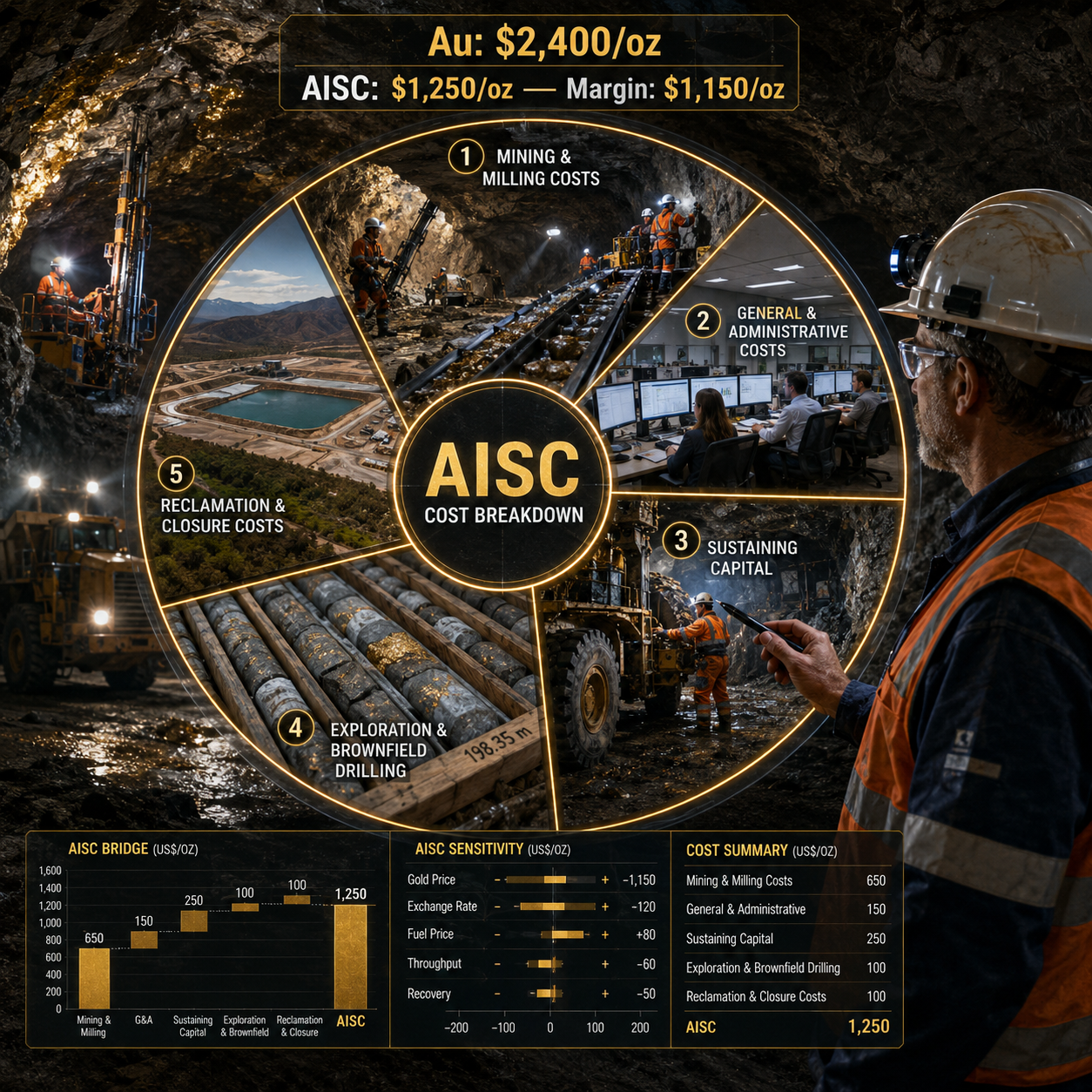
The all-in sustaining cost, abbreviated as AISC, is a cost metric used for the gold mining industry. It provides insight into the total costs required to produce an ounce of gold while maintaining ongoing operations. This measure was developed by the World Gold Council in 2013 in order to provide greater comparability in gold cost reporting and a more comprehensive alternative to cash costs reporting.
AISC calculations usually begin with direct cash operating expenses, which are followed by additional costs that sustain current operations. Commonly included in this metric are costs related to mining and ore processing, general and administrative expenses related to the facility, royalties or mining taxes, sustaining capital expenditures, and any exploration or evaluation activities that contribute to the maintenance of the resource. The resulting value is subsequently divided by the number of ounces of gold mined or sold by the firm.
In simple terms, the formula for calculating AISC is AISC = Cash cost + sustaining capital + sustaining exploration or evaluation cost + attributable G&A, per ounce. Other disclosure methods calculate AISC using accounting information where they adjust for non-cash expenses like depreciation and amortization, and add back to those cash expenditures required for sustaining operations. The point is AISC takes into account the expenses of sustaining mining operations beyond just the operating expenses of the mill and mine.
That is the reason AISC is better used when reporting margin in gold mining; it gives an accurate portrayal of margin and economic sustainability of the mine compared to just cash cost. The issue with cash cost is that it makes the mine appear less expensive since sustaining capital, among other recurring expenditure, are not accounted for. It therefore makes sense to use AISC when comparing two mines with comparable cash cost.
The AISC is favored among investors and analysts as the metric reflects both profitability and sustainability of mines based on the current prices of gold. If a mine boasts low AISC values, then the spread between the gold price and the mine costs becomes larger and this results in improved cash flows, dividend paying capability and greater chances of surviving price declines. In case a mine demonstrates relatively higher AISC, then its financial exposure rises during price drops.
The AISC is also beneficial for managerial purposes rather than for investment decisions only. Mining companies use AISC values to make decisions regarding expansion, output stabilization, deferring capital, and potentially mine closure if the price drops below sustainable levels. In summary, AISC should be favored as the metric covers total costs, provides accurate comparisons between peers, and presents more accurate long-term mine economics.