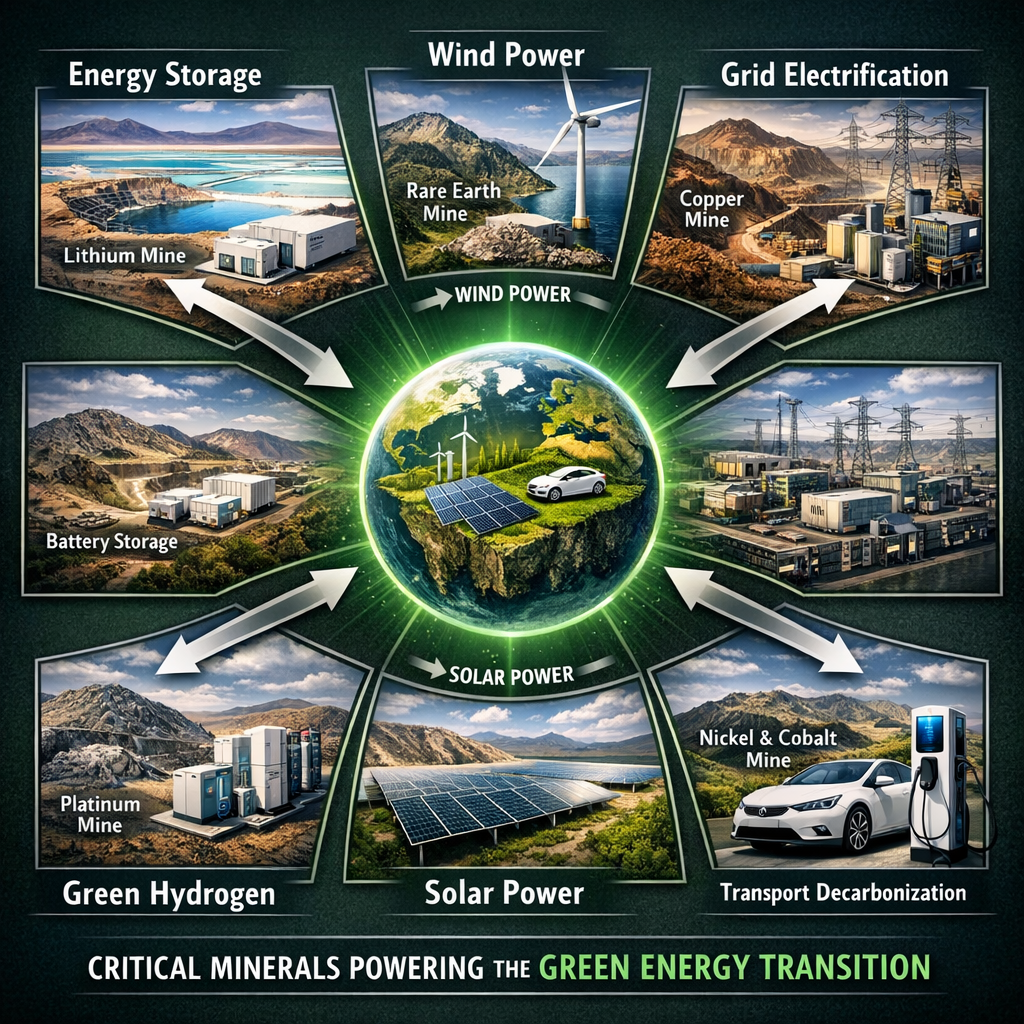
The global push toward decarbonization has fundamentally transformed the material requirements of the energy sector. While the 20th century was defined by the extraction and combustion of fossil fuels, the 21st century is witnessing a shift toward a mineral-intensive paradigm. Critical minerals, such as lithium, cobalt, nickel, copper, and rare earth elements, have emerged as the essential building blocks of this transformation, providing the physical foundation for technologies that generate, store, and transmit clean energy (Herrington, 2024).
The material intensity of renewables
Transitioning to a green economy is not a “weightless” process; renewable technologies are significantly more metal-heavy than their fossil-fuel predecessors. For instance, an electric vehicle (EV) typically requires twice as much copper and manganese as a traditional internal combustion engine. Furthermore, the lithium-ion batteries that serve as the heartbeat of these vehicles rely on a steady, high-volume supply of cobalt, nickel, and graphite (IEA, 2021).
Energy generation faces similar demands. Modern wind turbines, particularly high-capacity offshore models, depend on permanent magnets manufactured from rare earth elements like neodymium and dysprosium to convert kinetic energy into electricity efficiently (Lee et al., 2024). Across the board, clean energy systems can require between two and seven times more minerals per unit of installed capacity than coal or gas-fired power plants (IEA, 2021).
Strategic and economic significance
The importance of these minerals extends far beyond engineering; they are now central to global energy security and modern geopolitics. As nations race to secure their supply chains, the heavy concentration of mineral extraction and processing in a few specific geographic regions has created new strategic vulnerabilities (Saadaoui et al., 2025). This reliance on concentrated markets for “green” materials mirrors historical dependencies on oil-producing regions, often leading to increased protectionism and diplomatic friction (Lee et al., 2024).
Ultimately, the speed of the global energy transition is inextricably linked to the availability and affordability of these resources. Supply-demand gaps and price volatility do more than just impact corporate balance sheets; they can inflate the cost of clean technologies and stall the deployment of vital renewable capacity (Saadaoui et al., 2025).
Conclusion
Critical minerals are the indispensable hardware of the green economy. Securing a sustainable, stable, and ethical supply of these materials is no longer just a technical challenge; it is a fundamental prerequisite for meeting global climate targets. Without them, the ambition of moving from carbon-intensive fuels to a sustainable future remains an impossibility (Herrington, 2024; Saadaoui et al., 2025).
References
Herrington, R. J. (2024). The raw material challenge of creating a green economy. Minerals, 14(2), 204.
IEA. (2021). The role of critical minerals in clean energy transitions. International Energy Agency.
Lee, R., Ahuja, J., & Čavoški, A. (2024). The geopolitics of access to critical minerals necessary to support energy transition. Global Energy Law and Sustainability, 5(2), 163-181.
Saadaoui, J., Smyth, R., & Vespignani, J. (2025). Ensuring the security of the clean energy transition: Examining the impact of geopolitical risk on the price of critical minerals. Energy Economics, 142, 108195.