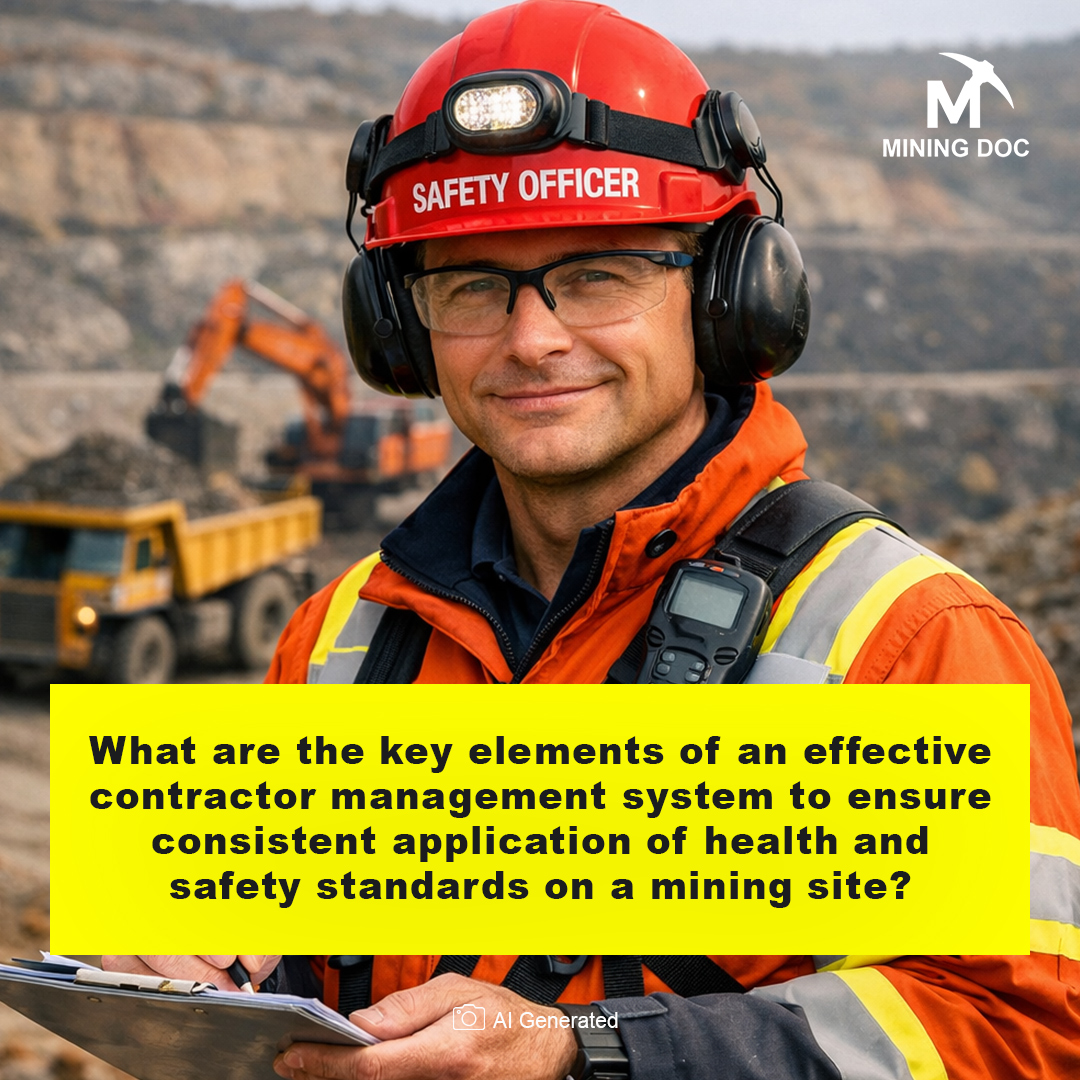
Contractor Safety Management System (CSMS) refers to a structured management system that helps an organization manage safety issues and reduce the risk of injury associated with contract labor. In the context of the mining industry, the use of contractors for specific tasks is common; however, contractors have been found to be associated with a higher risk of accidents on account of uncertain employment conditions as well as unfamiliarity with hazards at the worksite (Jackson & Quinlan, 2024). The CSMS fills this void by aligning contractors with strict safety guidelines of the host organization.
The most important thing for a successful CSMS system is the proper and meticulous screening and selection process of the contractor at the early stages of implementation of the project before any operations begin. The mining organization should carefully assess the safety record, policies, and ability to manage hazards of the particular contractor. Risk management at this stage would include hazard identification based on the specifics of the mining environment, for instance, open-pit work or interactions with equipment.
In addition to this step, it is equally important to exhibit visible leadership and commitment from the managers. Integration of the OHS system demands leadership styles that help build a common safety culture among both the company’s employees and contracted workers. The literature reveals that effective OHS performance among contractors depends largely on the implementation of policies and leadership that view safety as an inherent part of their operations, not just a compliance measure (Mambwe et al., 2021).
The next key ingredient is targeted training and human resources development. In light of the transient nature of contract workers, it becomes essential that mandatory safety inductions at site level be undertaken. Inappropriate skills among the operators, lack of safety leadership, and insufficient risk perception are common reasons why serious accidents happen in extractive companies, which can be attributed to human causes (Nwankwo et al., 2021).
Also, there should be active auditing to ensure adherence to occupational health and safety (OHS) practices while the projects are being undertaken. This will call for transparent ways to report accidents and regular site visits to confirm whether the contractors follow the laid-down guidelines. Early detection of faults or weaknesses within the auditing process is important since organizational weaknesses are usually indicative of impending industrial disasters (Jackson & Quinlan, 2024).
In summary, it is critical to note that having a well-designed CSMS is essential for reducing the hazards and protecting people’s lives within a mining site. This is made possible through proper synchronization of stringent pre-qualification (Badri et al., 2011), firm leadership (Mambwe et al., 2021), focused training (Nwankwo et al., 2021), and regular audit (Jackson & Quinlan, 2024). Ultimately, such an approach ensures worker safety and makes it an organizational advantage.
References
Badri, A., Nadeau, S., & Gbodossou, A. (2011). Integration of OHS into Risk Management in an Open-Pit Mining Project in Quebec (Canada). Minerals, 1(1), 3–29. https://doi.org/10.3390/min1010003
Jackson, H., & Quinlan, M. (2024). Contract labour in mining and occupational health and safety: A critical review. The Economic and Labour Relations Review, 35, 576–613. https://doi.org/10.1017/elr.2024.32
Mambwe, M., Mwanaumo, E. M., Thwala, W. D., & Aigbavboa, C. O. (2021). Evaluating Occupational Health and Safety Management Strategy Success Factors for Small-Scale Contractors in Zambia. Sustainability, 13(9), 4696. https://doi.org/10.3390/su13094696
Nwankwo, C. D., Arewa, A. O., Theophilus, S. C., & Esenowo, V. N. (2021). Analysis of accidents caused by human factors in the oil and gas industry using the HFACS-OGI framework. International Journal of Occupational Safety and Ergonomics, 28, 1642–1654. https://doi.org/10.1080/10803548.2021.1916238