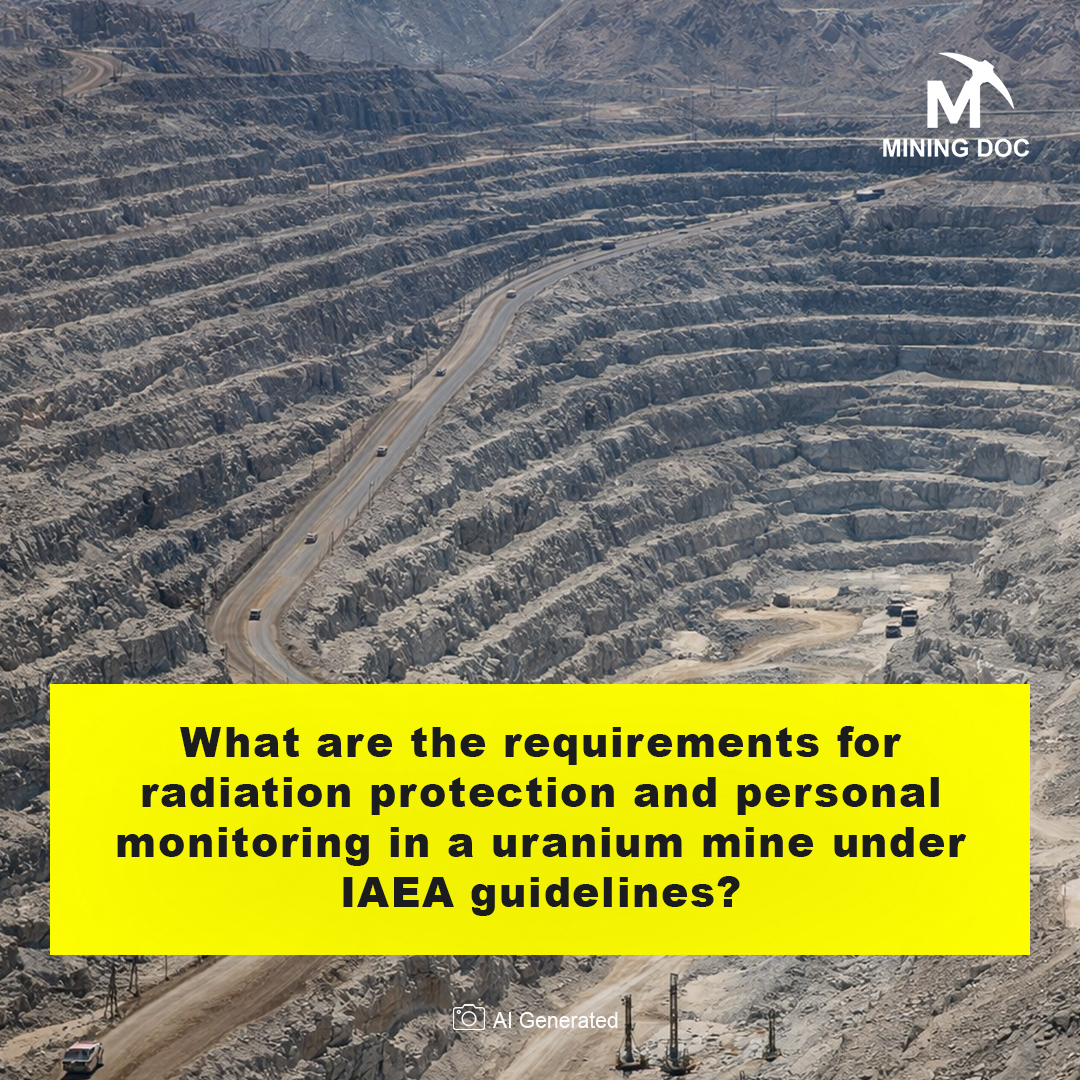
Uranium mining is a process involving the removal of ores and therefore there will definitely be exposure of the people to the ionizing radiations. Measures against radiation involve all those vital measures and regulations which help protect humans from such harmful effects. To deal with these risks, the International Atomic Energy Agency has issued safety standards for occupational exposure. The standards have ensured that there is proper control of NORM and effective personal dosimetry system is established.
The main radiological risks in a uranium mine emanate from the radioactive decay of uranium, producing alpha, beta and gamma rays. The most dangerous of all is the inhalation of radon and its progeny that cause lung cancer (Geofrey et al., 2021). Continuous external gamma irradiation from surrounding ores and aerosols is also a risk faced by miners. It is imperative to appreciate these dangers to put in place important safety procedures.
According to the IAEA regulations, there are very strict guidelines for radiation protection that are regulated by three major principles of justification, optimization, and dose limitations. There is an obligatory requirement for occupational exposures to be kept As Low As Reasonably Achievable (ALARA) according to the framework. The IAEA imposes very strict effective dose limit per year in order to prevent miners from harmful radiation levels. In addition, there are clearance and exemption levels set depending on activity concentrations of radionuclides in the uranium series (Trevisi et al., 2023).
Personal monitoring plays an important role in the protection strategy of the IAEA and serves as one of the means to assess and document the dose of radiation received by individuals. It includes measurement of external radiation of gamma rays with the use of dosimeters and measurements of internal exposure using personal air samplers that can detect radioactive dust and radon daughters.
For the purpose of effective monitoring, the IAEA recommends setting some reference levels, and among those, the most important are investigation and intervention levels. If there is a sharp rise in dose received, then investigation level means that the situation must be immediately assessed. On the other hand, the intervention level will tell how to take action to reduce exposure rates and bring them to acceptable levels, such as removing people from radiation exposure sites or improving mine ventilation.
To summarize, safeguarding the interests of miners working in uranium mines entails a firm adherence to international regulations. Setting certain dose limits along with providing necessary personal monitoring are key requirements that the IAEA recommends to follow in order to ensure the safety of miners. Thus, the implementation of these radiation protection measures helps eliminate potential health hazards posed by ionizing radiation.
References
Geofrey, A., Sinde, R. S., & Kaijage, S. F. (2021). The real-time IoT-based monitoring radiation level, the case of Mkuju River uranium mining. 2021 IEEE International Conference on Smart Internet of Things (SmartIoT), 262–266. https://doi.org/10.1109/smartiot52359.2021.00048
Trevisi, R., Ampollini, M., Bogi, A., et al. (2023). Radiological protection in industries involving NORM: A (graded) methodological approach to characterize the exposure situations. Atmosphere, 14(4), 635. https://doi.org/10.3390/atmos14040635